考点猜测
编程题最大可能来源。
链接方式存储的线性表简称为链表。
- 用一组任意的存储单元存储表
- 每个数据元素(ai)不但包含元素值(data),还必须存储相邻数据元素(ai-1)或(ai+1)的地址。
¶ 单链表
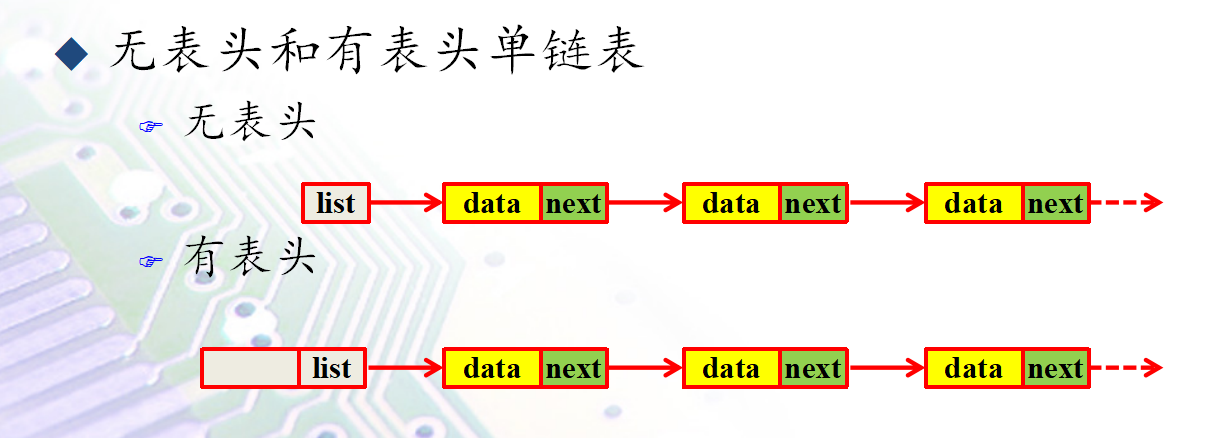
每个节点包含两个域,data存储该节点的元素,next存储下一节点的地址

分为有表头和无表头
¶ 操作
¶ 插入
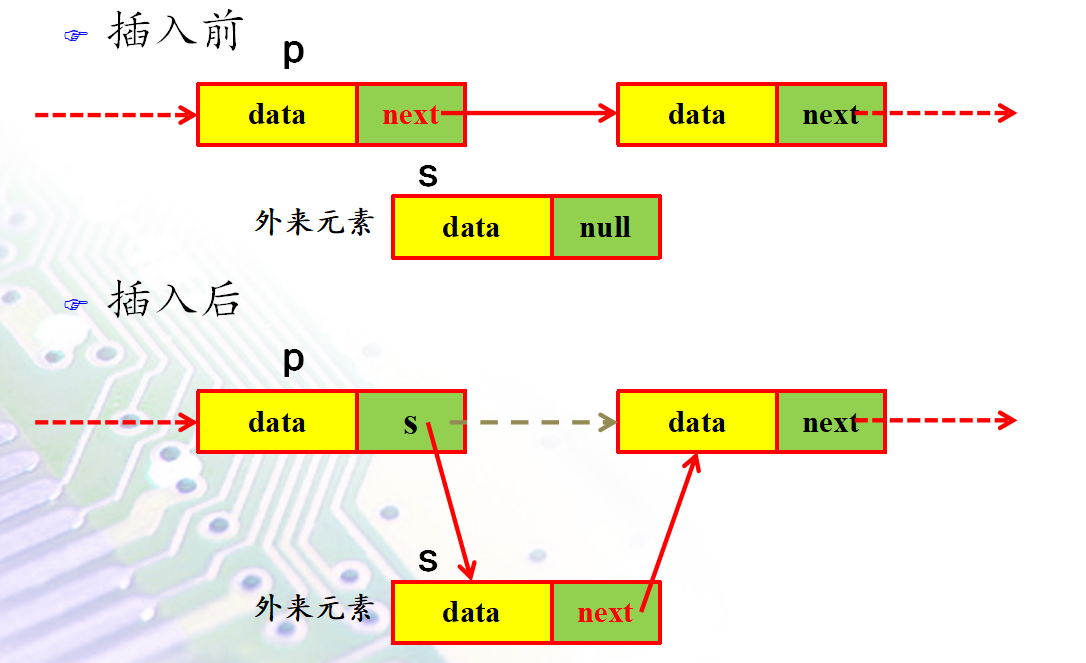
s->next = p->next; // 1.s的 后 继 指 向p的 后 继
p->next = s;       // 2.p的 后 继 指 向s
时间复杂度:
¶ 删除
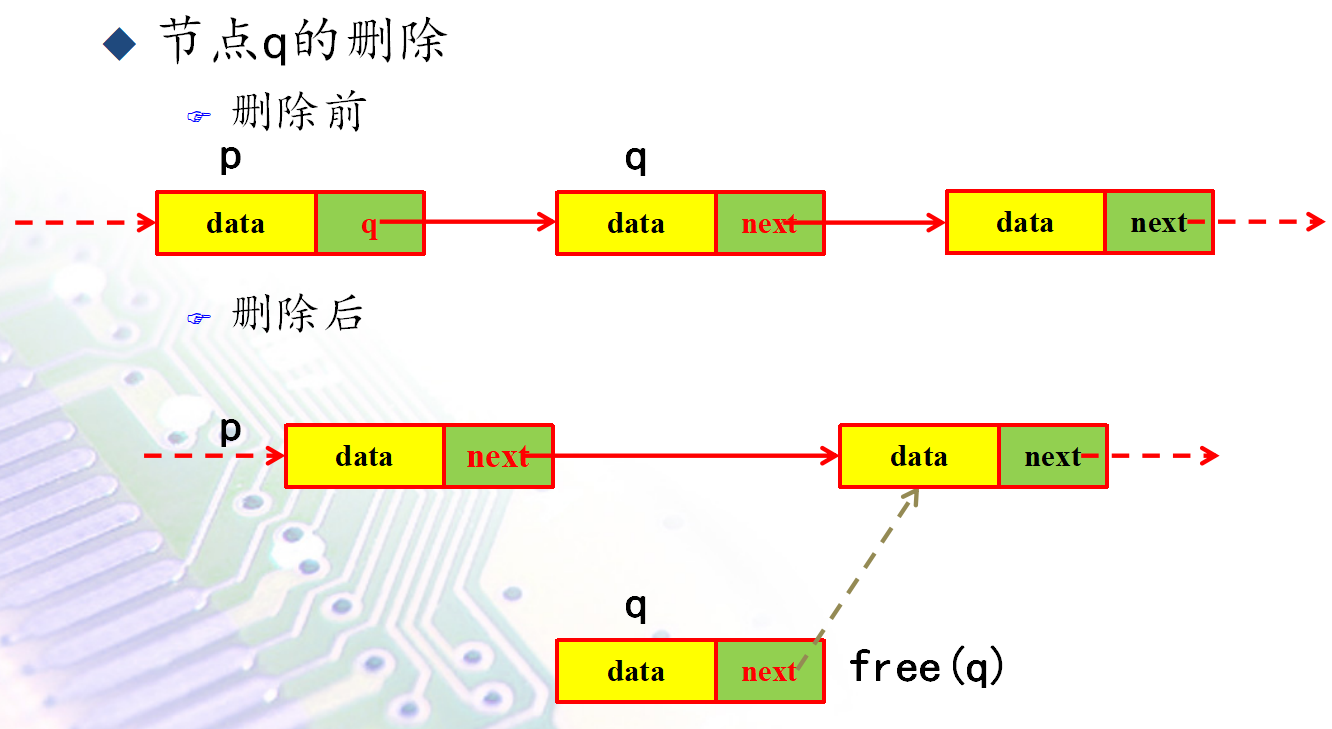
q = p->next; // 1.q指 向 待 删 除 节 点
p->next = q->next; // 2.p的 后 继 指 向q的 后 继
free(q); // 3.释 放q节 点
不要忘记释放q节点。
时间复杂度:
¶ 无表头单链表
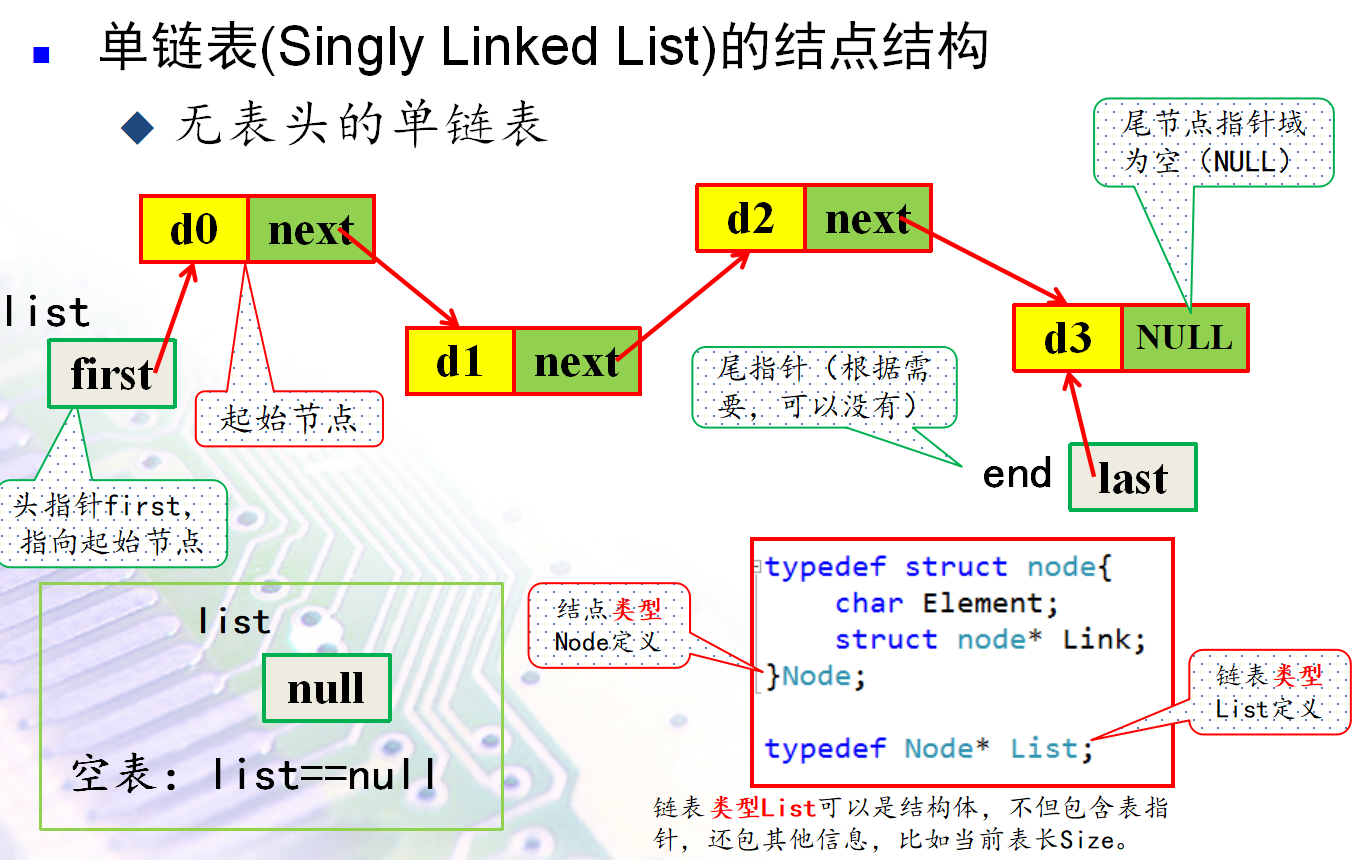
数据结构定义:
typedef struct node{
    char Element;
    struct node* Link;
}Node; //节点类型定义
typedef Node* List //头指针定义
List head;
空表的时候:list==null
¶ 头插法
【链表的头插法,数据结构与算法完整代码动画,考研408 期末考试数据结构】
struct Node *head = NULL;
void insertHead(int e){
    Node *newNode = (Node *)malloc(sizeof(Node));
    newNode -> data = e;
    newNode -> next = head;
    head = newNode;
}
时间复杂度:
¶ 尾插法
struct Node* head;
void insertLast(int e){
    Node *newNode = (Node *)malloc(sizeof(Node));
    newNode -> data = e;
    newNode -> next = NULL;
    if(head == NULL){
        head = newNode;
    }
    else{
        Node* lastNode = head;
        while(lastNode->next != NULL){
            lastNode = lastNode -> next;
        } //寻找尾节点
        lastNode -> next = newNode;
    }
}
时间复杂度:
¶ 有表头单链表
数据结构定义:
typedef struct node{
    char Element;
    struct node* Link;
}Node; //节点类型定义
typedef Node* List //头指针定义
List head = (Node*) malloc(sizeof(Node)); //头节点定义
head -> next = NULL;
同无表头
表头结点位于表的最前端,本身不带数据
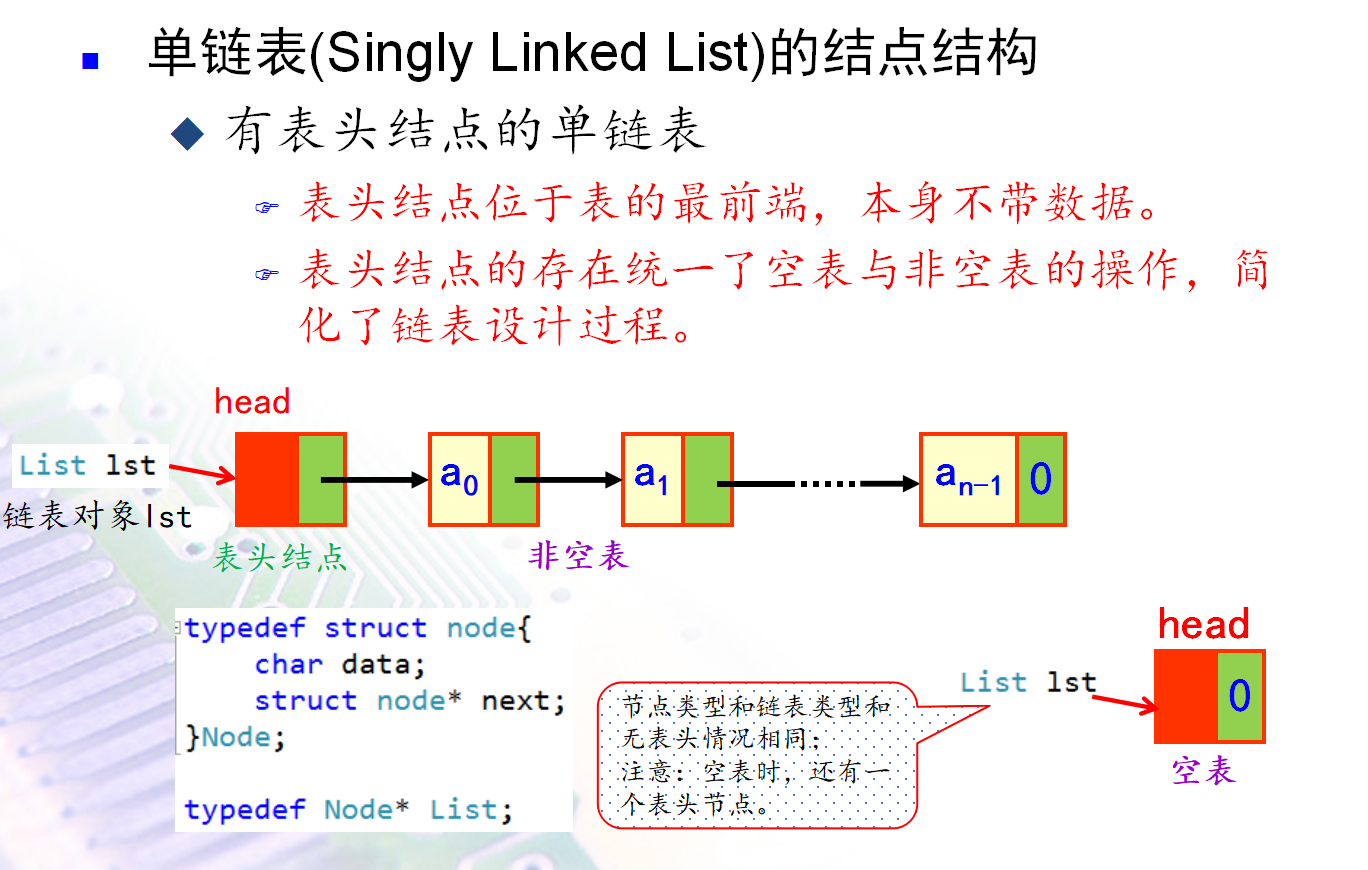
表头节点(头节点)后的第一个节点(整个链表的第一个数据节点)称为首元节点。
有表头单链表简化在哪里?
无表头单链表需要区分空表时头指针为NULL的情况,而有表头单链表即使是空表,仍然存在头节点,头指针不为空。所以在寻找有表头单链表的最后一个元素时,直接按照判定一个普通节点是否有后继(node->next != NULL)即可。
¶ 头插法
List head = (List)malloc(sizeof(List))
List_Insert(int e){
    Node* newNode = (Node*)malloc(sizeof(Node));
    newNode->data = e;
    newNode->next = head->next;
    head->next = newNode;
}
时间复杂度:
¶ 尾插法
这里令头节点中存储链表的长度。
List head = (List)malloc(sizeof(List));
head->next = NULL;
head->data = 0;
void insertLast(int e){
    Node *newNode = (Node *)malloc(sizeof(Node));
    newNode->data = e;
    newNode->next = NULL;
    Node *lastNode = head;
    while(lastNode->next != NULL){
        lastNode = lastNode->next;
    }
    lastNode->next = newNode;
    head->data++;
}
时间复杂度:
¶ 遍历求表长
int GetListLength(List p)
{
    int length = 0;
    while(p->next != NULL){
        p = p->next;
        length++;
    }
    return length;
}
时间复杂度:
¶ 返回位i的数据
char GetListNode(List p,int i){
    int j=0;
    while(p!=NULL && j<i){
        p = p-next;
        j++;
    }
    if(p==NULL || j>i)
        return -1;
    return p->data;
}
¶ 循环链表
最后一个结点的next指针不为0(NULL),而是指向了表的前端。从任意结点出发均能找到其他结点。
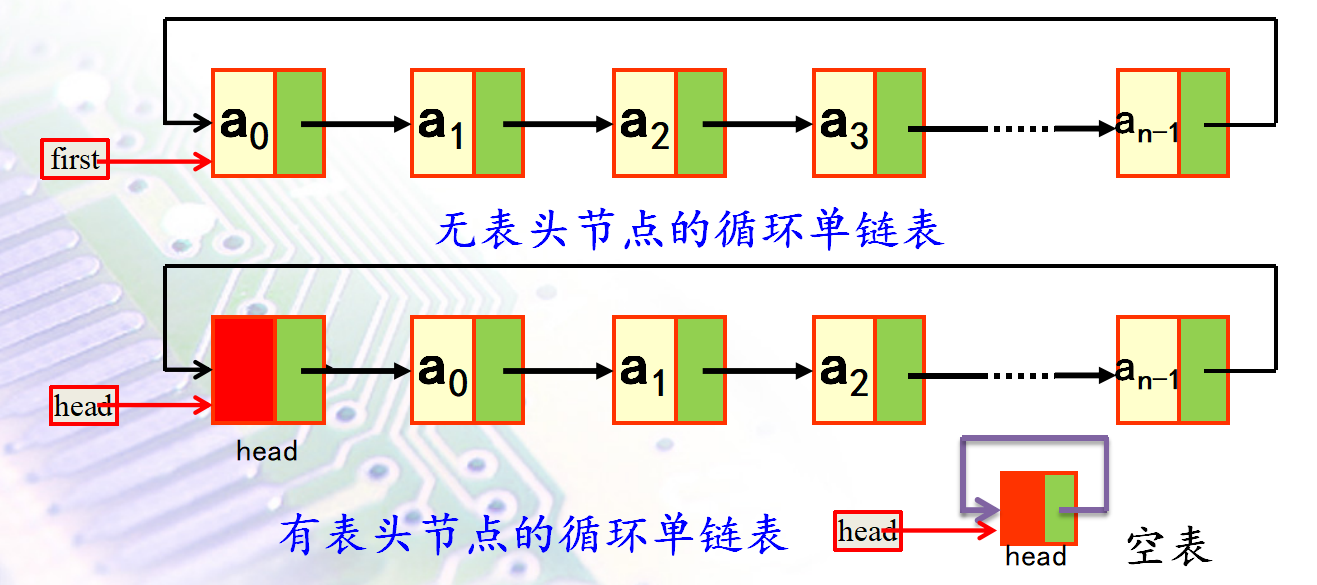
- 判断空表的条件:
head == head->next
- 判断表尾节点的条件
head == p->next
¶ 双链表
双链表一般被设计为带表头结点的循环双链表,便于操作
单个节点的结构:

循环双链表结构:

- 判断空表的条件:
head == head->pri == head->next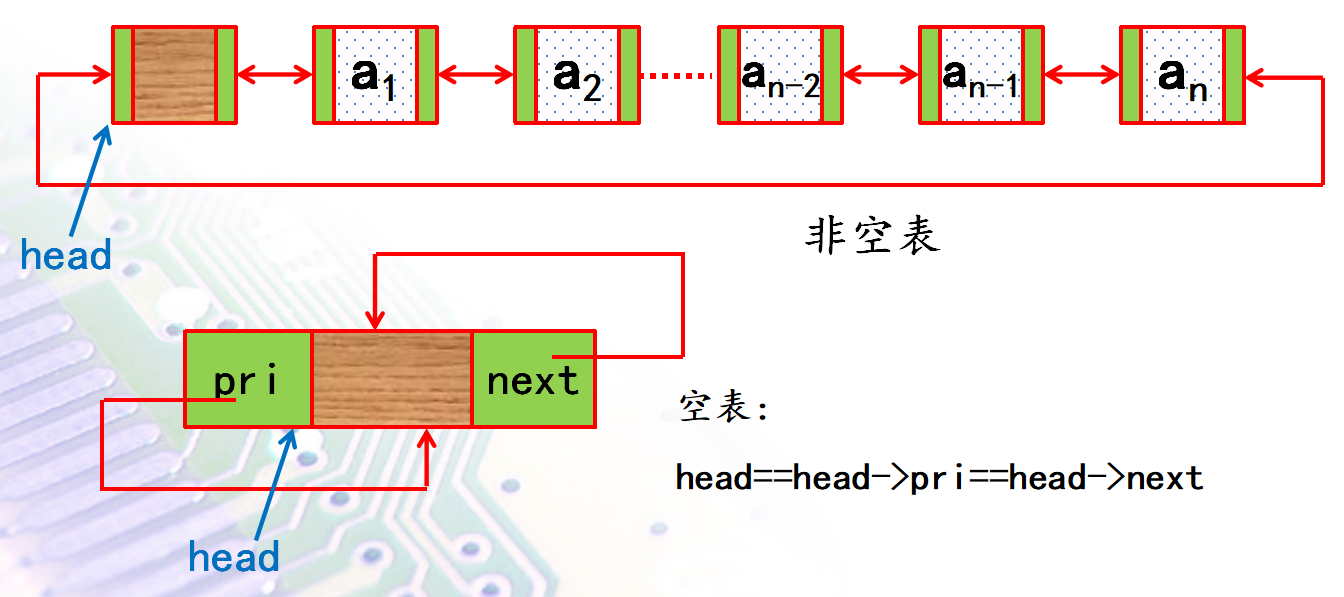
数据结构定义:
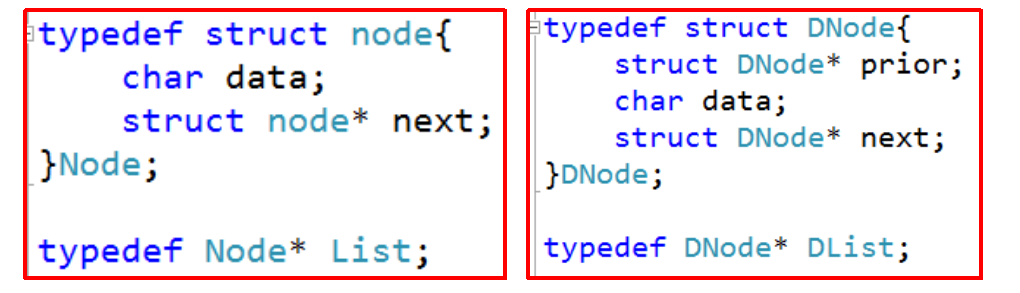
typedef struct node{
    struct node* prior;
    char data;
    struct node* next;
}Node;
¶ 操作
¶ 插入
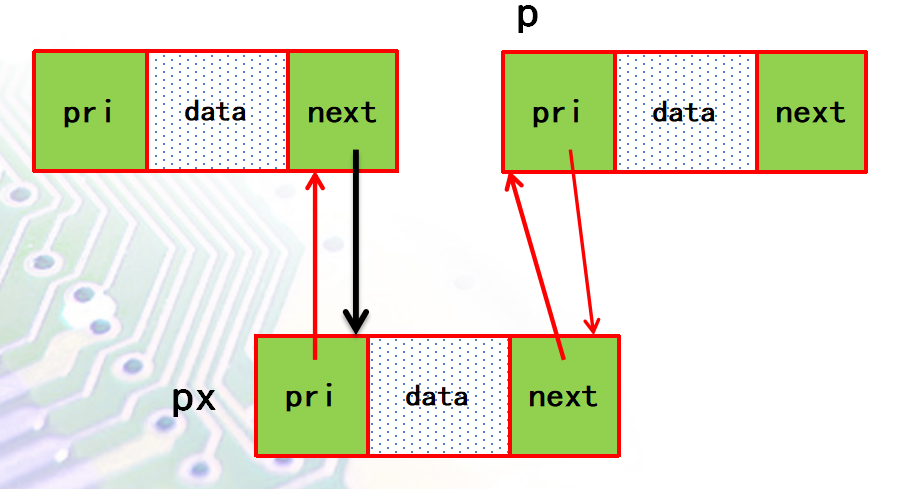
将px节点插到p节点前:
px->next=p;	      	//1.令px后继指针指向p
px->prior=p->prior;	//2.令px的前驱指针指向p的前驱
p->prior=px;		//3.令p的前驱指针指向px
px->prior->next=px;	//4.令px前驱指针指向px
插入前:
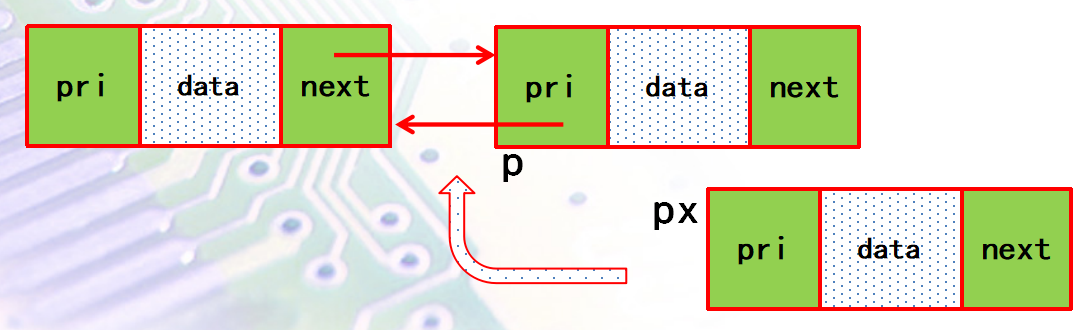
插入后:
¶ 删除
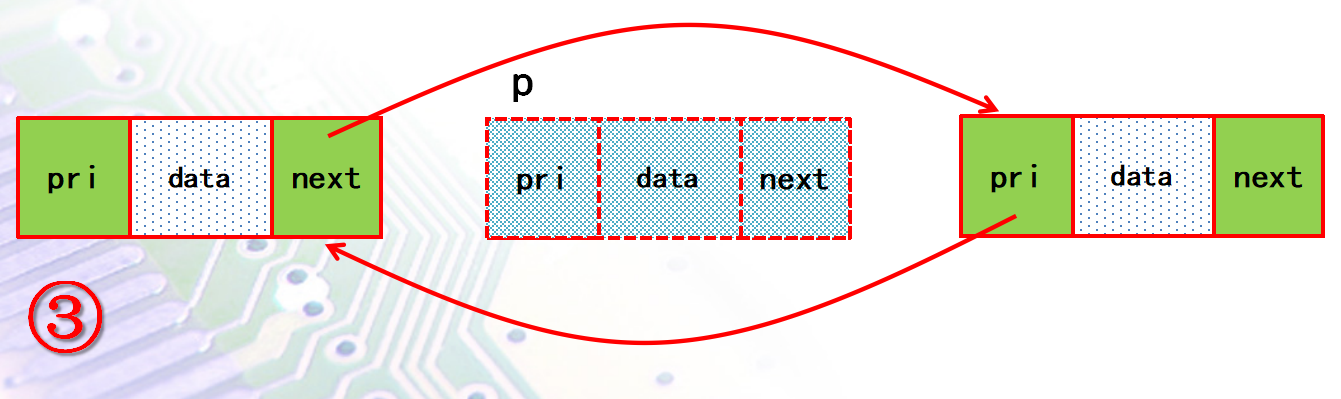
将节点p删除:
p->next->prior=p->prior;    //1.让p的后继指向p的前驱
p->prior->next=p->next;	    //2.让p的前驱指向p的后继
free(p);                    //3.释放节点p的空间

¶ 约瑟夫斯问题
问题描述:N 个人围成一圈,从某人开始报数,数到 k 的人出圈,然后从下一个
人继续报数,求出圈顺序
使用顺序表实现:
void Josephus(List *input_queue, int removeIndex, List *output_queue){
    int out_pos = 0;
    int i = 0;
    while(input_queue->Length)
    {
        for(i = 0; i<removeIndex-1; i++)
            out_pos = (out_pos+1) %input_queue->Length;
        T_chd output_data;
        Remove(input_queue, out_pos, &output_data);
        Append(output_queue, output_data);
    }
}
¶ 作业
题目:
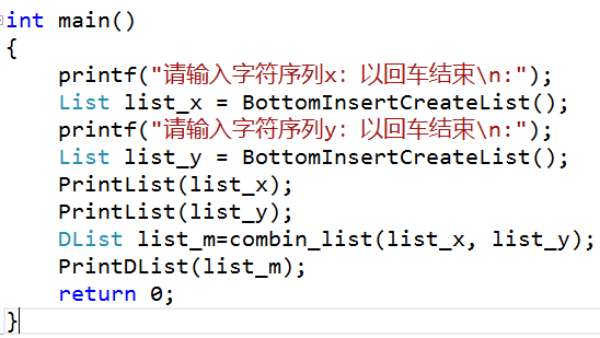
令X=(x1, x2,…,xn)和Y=(y1, y2,…,ym)是两个带表头的单链表,编写程序合并X和Y并存储在新的带表头节点的双链表M中,

运行过程中,X和Y通过键盘输入字符构建单链表,合并后打印双链表M的数据。
链表的定义:
主函数:
节点插入函数:

请写出combin_list函数。
DList combin_list(List x, List y){
    List px = x->next;
    List py = y->next;
    DList list_m = InitDList();
    while(px ||py){
        if(px){
            InsertDNode(list_m, px->data, 0);
            px = px->next;
        }
        if(py){
            InsertDNode(list_m, py->data, 0);
            py = py->next;
        }
    }
    return list_m;
}